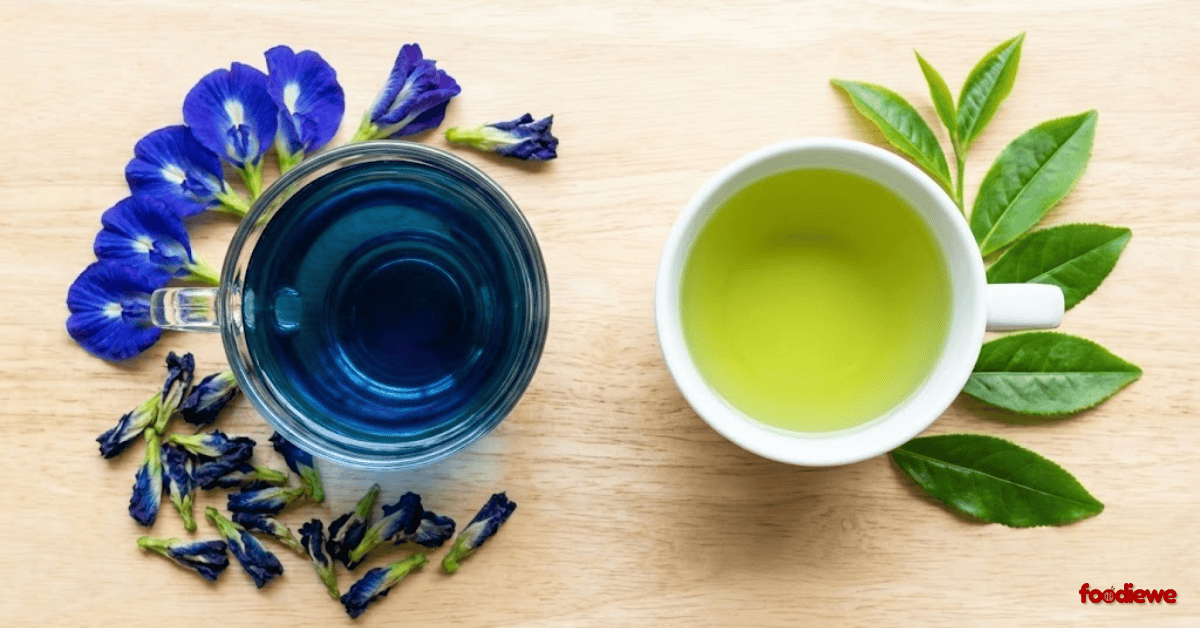
We’ve all been there — scrolling through wellness content late at night, wondering which tea actually works. If you’re comparing aparajita tea vs green tea, you’re asking the right question.
Both teas are natural, both are low-calorie, and both promise real health benefits. But they work differently, benefit different goals, and suit different lifestyles.
Made from the butterfly pea flower (known as aparajita ke phool in Hindi), aparajita tea has deep Ayurvedic roots and is completely caffeine-free. Green tea, backed by decades of research, remains India’s most trusted drink for weight loss and metabolism.
So which one actually belongs in your daily routine? We compare aparajita tea vs green tea across weight loss, skin glow, side effects, and daily use — with real facts, no fluff.
What Is Aparajita Tea? (Butterfly Pea Flower Explained)
If you’ve been seeing that stunning blue tea everywhere and wondering what it actually is — it’s aparajita tea, made from the dried flowers of the Clitoria ternatea plant. This climbing vine grows naturally in Indian backyards and Ayurvedic gardens, and its flowers — known as aparajita ke phool or aparajita phool in Hindi — have been used in Ayurveda for centuries to cool the body, sharpen the mind, and support skin and hair health.
To make butterfly pea flower tea, steep 1–2 teaspoons of dried aparajita flowers in hot water (not boiling) for 5–10 minutes. What you get is a striking blue brew that is completely caffeine-free, with a mild earthy taste. Squeeze in lemon and it turns purple — that’s the natural pH magic of anthocyanins at work.
Key nutrients include anthocyanins like ternatins (powerful antioxidants), vitamins A and C, iron, and magnesium — all working together to fight free radical damage and support immunity from within.
When comparing aparajita tea vs green tea, this caffeine-free nature is the first major difference you’ll notice.
What Is Green Tea?
Green tea comes from young leaves of the Camellia sinensis plant, grown across Assam, Darjeeling, and other misty regions of India. It remains one of India’s most trusted herbal drinks — especially for weight loss, metabolism, and daily energy.
The leaves are quickly steamed or pan-fried to stop oxidation, which preserves their green color and fresh, slightly nutty flavor. Brew it at 80°C for 2–3 minutes to avoid bitterness. Each cup contains 20–45mg of caffeine — enough for a gentle morning boost without jitters.
Its standout compounds are catechins like EGCG — one of the most studied antioxidants for fat burn and skin protection — and L-theanine, which promotes calm focus. Popular varieties include Sencha (light and fresh) and Matcha (whole-leaf powder for maximum potency).
This is exactly why, in the aparajita tea vs green tea debate, green tea is often the first choice for morning energy and weight loss goals.
Nutritional Comparison: Aparajita Tea vs Green Tea
Before choosing between the two, it helps to understand what you’re actually drinking. In the aparajita tea vs green tea comparison, both are near-zero calorie drinks — but their active compounds target health very differently.
Aparajita tea is rich in anthocyanins (ternatins) — color-based antioxidants that protect skin, support collagen, and regulate blood sugar. It also contains vitamins A and C, iron, and magnesium.
Green tea is powered by catechins like EGCG — the most researched antioxidant for fat metabolism and skin protection — along with L-theanine for calm focus and 20–45mg of natural caffeine.
| Nutrient | Aparajita Tea (Butterfly Pea Flower) | Green Tea |
| Calories per Cup | ~2-5 | ~2 |
| Antioxidants | Anthocyanins (ternatins) | Catechins (EGCG) |
| Caffeine | None | 20-45mg |
| Vitamins & Minerals | A, C, iron, magnesium | C, E, selenium |
Simple rule: if you want skin + sugar control, aparajita leads. If you want fat burn + energy, green tea wins.
Aparajita Tea for Weight Loss: How Effective Is It?
In the aparajita tea vs green tea weight loss debate, aparajita works more gently — but don’t underestimate it.
Its anthocyanins help regulate blood sugar, preventing the post-meal spikes that lead to fat storage and cravings — especially relevant after heavy Indian meals like roti or rice. It also reduces bloating by acting as a mild diuretic, flushing excess water without draining your energy. Plus, it supports liver health and steady digestion, both essential for long-term weight management.
Best time to drink: Evening or 30 minutes before meals.
Recommended: 1–2 cups daily, paired with regular walks for best results.
Green Tea for Weight Loss: What Science Says
When it comes to aparajita tea vs green tea for weight loss, green tea has the stronger scientific backing.
Its EGCG content boosts metabolism by 3–4%, helping your body burn 50–100 extra calories daily — even at rest. It also promotes fat oxidation, meaning it actively breaks down stored fat during exercise. L-theanine and caffeine together curb appetite mildly, making it easier to avoid unnecessary snacking.
Studies show that 2–3 cups daily can support modest weight loss of 1–2kg over months when combined with a balanced diet.
Best time to drink: Mid-morning or 30 minutes before a workout.
Aparajita Tea for Skin Glow & Hair Health
One area where aparajita tea vs green tea clearly favors aparajita is skin and hair.
The anthocyanins in butterfly pea flower tea support collagen production, keeping skin firm and reducing dullness caused by pollution and sun exposure. Traditionally, aparajita ke phool rinses have been used to strengthen hair roots and fight dandruff. Its calming properties also help lower stress — a major but often ignored trigger for acne and breakouts.
Regular consumption supports a natural glow from within — not just surface-level hydration.
Green Tea for Skin Glow
Green tea targets skin differently in the aparajita tea vs green tea comparison. Its EGCG reduces acne by controlling oil production and fighting bacteria — without drying out skin. Polyphenols protect collagen from UV damage, slowing early signs of aging like fine lines and uneven texture. It also helps balance sebum, minimizing pores over time.
If acne, oiliness, or sun damage is your primary concern, green tea has a clear edge here.
Aparajita Tea vs Green Tea: Head-to-Head Comparison
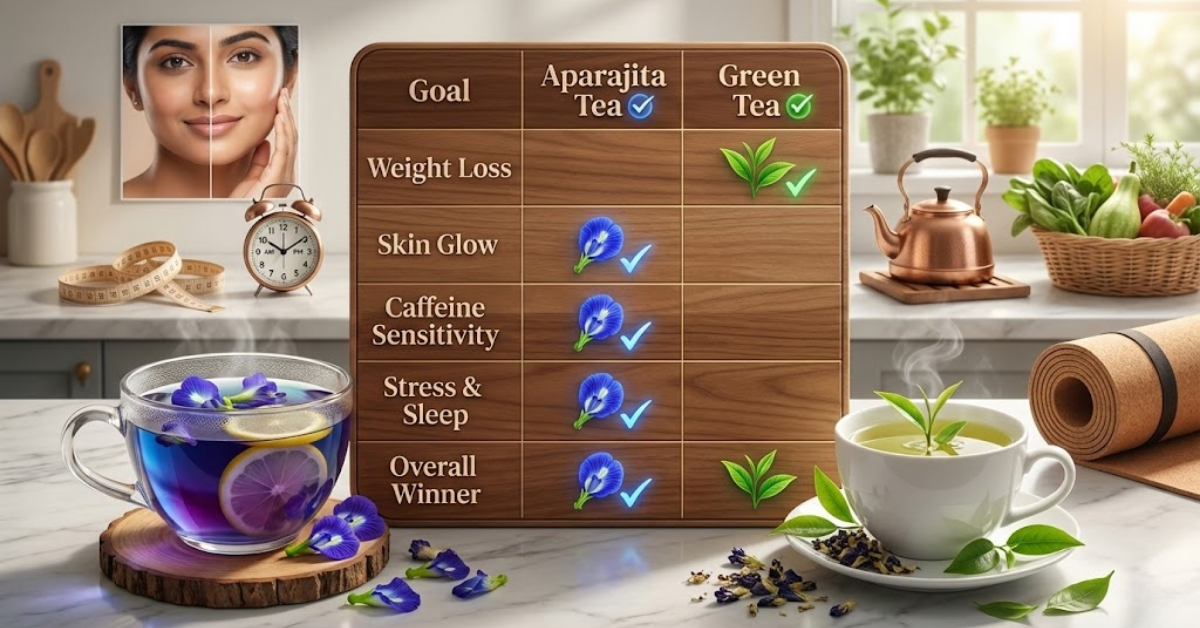
Both teas aid weight loss and skin glow, but here’s how they stack up:
| Goal | Aparajita Tea Wins If… | Green Tea Wins If… |
| Weight Loss | You want sugar control & detox | You need metabolism boost |
| Skin Glow | Collagen & hair support | Acne & oil control |
| Caffeine Sensitivity | Zero caffeine, anytime drink | Mild energy needed |
| Stress & Sleep | Calms mind for better skin | Focus without crash |
Aparajita Tea Side Effects: Is It Safe to Drink Daily?
Before choosing aparajita tea vs green tea, knowing the side effects of both is important.
Aparajita tea side effects:
- More than 3 cups daily may cause mild stomach upset
- Temporary blue tinge on tongue (harmless)
- Pregnant women should avoid — it may have uterine-stimulating effects
- Always consult a doctor if you have existing health conditions
Green tea side effects:
- Caffeine can cause insomnia or acid reflux if consumed late in the day
- Tannins may block iron absorption — best consumed between meals
- Limit to 2–3 cups if pregnant or anemic
Both are safe in moderation. When in doubt, start with 1 cup daily and observe how your body responds.
How to Drink Blue Tea & Green Tea for Best Results
Getting the most out of aparajita tea vs green tea comes down to how and when you drink them.
Brewing tips:
- Aparajita tea: Steep dried butterfly pea flowers in 90°C water for 5–8 minutes. Do not use boiling water — it destroys the anthocyanins.
- Green tea: Brew at 80°C for 2–3 minutes. Boiling water makes it bitter and reduces EGCG effectiveness.
Best times:
- Aparajita tea → Evenings or before meals
- Green tea → Morning or pre-workout
Simple recipe — Aparajita Glow Lemonade: Steep aparajita ke phool for 5 minutes, add fresh lemon juice (watch it turn purple!), and a drizzle of honey. A hydrating, antioxidant-rich drink that works for both weight loss and skin glow.
Aparajita Flower Tea Benefits: 7 Reasons to Try It
If you’re still on the fence in the aparajita tea vs green tea decision, here’s why aparajita deserves serious consideration:
- Completely caffeine-free — safe to drink morning, afternoon, or night
- Rich in anthocyanins — fights free radicals and slows skin aging
- Supports collagen production — for firmer, glowing skin
- Regulates blood sugar — reduces post-meal cravings and fat storage
- Reduces bloating — gentle diuretic effect without energy loss
- Supports hair health — traditionally used to strengthen roots and reduce dandruff
- Calms the mind — natural stress relief that also helps prevent stress-related acne
Final Verdict: Which Tea Is Better for You?
The aparajita tea vs green tea debate doesn’t have one universal winner — it depends entirely on your goal.
Choose aparajita tea if:
- You want caffeine-free relaxation
- Your focus is skin glow, hair health, and collagen support
- You struggle with blood sugar spikes or post-meal cravings
- You prefer an evening tea that calms rather than stimulates
Choose green tea if:
- Weight loss and fat burn is your primary goal
- You need a gentle morning energy boost
- Acne, oiliness, or UV skin damage is your main concern
- You want science-backed metabolic support
Or honestly — drink both. Aparajita tea in the evening, green tea in the morning. Your body gets the best of both worlds.
The right tea isn’t the one everyone else is drinking — it’s the one that fits your health goal. Now you know the difference.
FAQ’s
Q1. Is it good to drink Aparajita tea every day?
Yes, 1–2 cups of aparajita tea daily is safe for most healthy adults. Since it’s completely caffeine-free, you can drink it any time of day. Pregnant women or people on medication should consult a doctor first.
Q2. Which tea is better than green tea?
Aparajita tea beats green tea in specific areas — zero caffeine, better for skin and collagen, gentler on the stomach, and safe to drink at night. For fat burn and metabolism, green tea still leads.
Q3. Who should not drink butterfly pea tea?
Pregnant women, breastfeeding mothers, people on blood thinners or diabetes medication, and those with legume allergies should avoid butterfly pea flower tea or consult a doctor before drinking it regularly.