

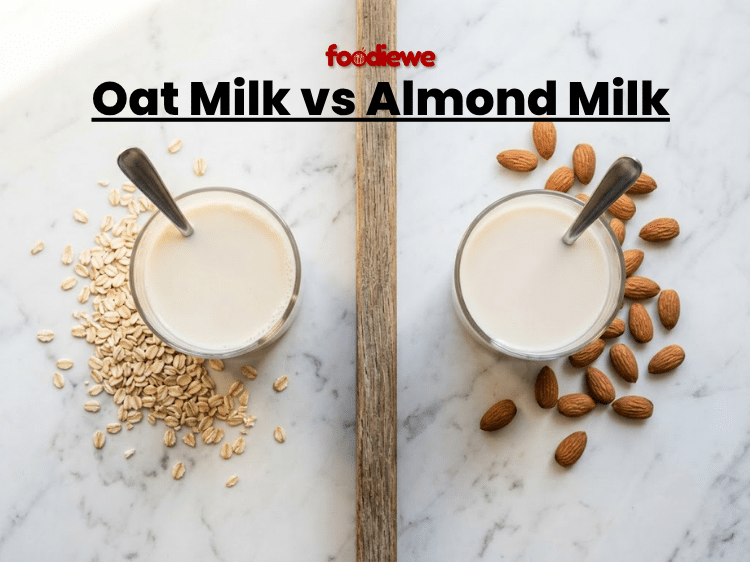
Oat milk vs almond milk is one of the most searched dairy-free comparisons right now — and for good reason.
Almond milk is lower in calories and carbs, making it the better pick for weight loss and low-carb diets. Oat milk is creamier, higher in fibre, and the clear winner for coffee and baking.
In this guide, we compare nutrition, health benefits, environmental impact, and best uses — so you can decide which one actually fits your lifestyle.
Oat Milk vs Almond Milk: Nutrition Comparison
Both oat milk and almond milk are low in calories compared to regular dairy milk, but they differ more than you’d expect once you look at the numbers.
Here’s the nutritional breakdown for 1 cup (240 mL) of oat milk vs almond milk, based on USDA FoodData Central data:
| Nutrient | Oat Milk | Almond Milk |
| Calories | 79 kcal | 59 kcal |
| Protein | 4 g | 1 g |
| Carbohydrates | 14 g | 8 g |
| Fat | 1.5 g | 2 g |
| Fibre | 2 g | 1 g |
| Iron | 6% of Daily Value | 2% of Daily Value |
| Calcium | 1% of Daily Value | 15% of Daily Value |
| Vitamin E | Low | High |
| Sodium | 5% of Daily Value | <1% of Daily Value |
Summary: In the oat milk vs almond milk debate, almond milk is lower in calories and carbs, while oat milk is higher in protein, fibre, and iron. Almond milk leads in calcium and Vitamin E. Fortified brands can significantly boost both milks’ micronutrient profiles.
Oat Milk vs Almond Milk – Health Benefits
Oat Milk: What It’s Good For
- Heart health support. Oat milk naturally contains beta-glucan, a type of soluble fibre found in oats that has been shown to help reduce LDL (“bad”) cholesterol levels — a key risk factor for heart disease. This is something almond milk simply doesn’t offer.
- More satiating. With 4 grams of protein and 2 grams of fibre per cup, oat milk keeps you fuller for longer than almond milk. If you’re using plant milk as part of a meal or workout recovery, this matters.
- Nut-free. For people with tree nut allergies, oat milk is a safe and creamy alternative that doesn’t compromise on texture.
- Easy to digest. The naturally smooth consistency of oat milk tends to sit well on the stomach for most people, even those sensitive to nuts.
Almond Milk: What It’s Good For
- Lower in calories. At roughly 59 kcal per cup (unsweetened), almond milk is one of the lowest-calorie plant milks available — ideal for weight management goals.
- Rich in Vitamin E. Almond milk is a notable natural source of Vitamin E, a powerful antioxidant that supports immune function, skin health, and eye health.
- Low in carbs — keto and diabetic-friendly. With only 8 grams of carbs per cup (and much less in many brands), unsweetened almond milk fits well into low-carb, keto, and diabetic-friendly diets.
- Higher in calcium (when fortified). Many fortified almond milk brands contain up to 15% of your Daily Value of calcium per serving, which is significantly more than plain oat milk.
Summary: Oat milk stands out for its heart-healthy beta-glucan, protein content, and nut-free profile. Almond milk shines for its low calories, Vitamin E content, and suitability for low-carb and keto diets. Both are excellent sources of fortified micronutrients for plant-based eaters.
Oat Milk vs Almond Milk: Downsides to Know
Before you commit to either option, here are the honest trade-offs — the ones most blogs skip.
Both Milks Compared to Dairy:
- Lower in protein. Regular cow’s milk provides ~8 g of protein per cup. Both oat milk and almond milk fall far short of that — especially almond milk at just 1 g.
- May contain added sugar. Flavoured or “original” (non-unsweetened) varieties often contain 10–15 g of added sugar per serving. This can contribute to weight gain, blood sugar spikes, and long-term metabolic issues.
- Unfortified versions lack key nutrients. If a brand isn’t fortified, you may miss out on calcium, B12, and vitamin D that dairy naturally provides.
Specific to Almond Milk:
- Contains carrageenan in some brands. Carrageenan is a food additive used as a thickener and stabiliser in some almond milk products. While it’s FDA-approved, some test-tube studies suggest it may promote gut inflammation when consumed in large amounts. Oat milk tends not to require these additives due to its naturally creamy texture.
- High water usage in production (more on this below).
- Not suitable for nut allergies. Anyone with a tree nut allergy cannot consume almond milk safely.
Specific to Oat Milk:
- Higher in carbohydrates. At 14 g of carbs per cup, oat milk is not suitable for keto or very low-carb diets.
- May not work for gluten-sensitive individuals. Though oats are naturally gluten-free, many brands are processed in facilities shared with wheat. Look for certified gluten-free oat milk if you have coeliac disease or gluten sensitivity.
Summary: Both milks are lower in protein than cow’s milk and may contain added sugar. Almond milk sometimes contains carrageenan and isn’t suitable for nut allergies. Oat milk is higher in carbs and may not work for gluten-sensitive people or those on keto diets.
Oat Milk vs Almond Milk: How They’re Made
How Is Almond Milk Made?
How to make almond milk at home is simpler than most people think — and far cheaper than buying it in a carton.
Homemade almond milk recipe:
- Soak 1 cup of raw almonds in water overnight (8 hours minimum)
- Drain and rinse thoroughly
- Blend with 3–4 cups of fresh water for 1–2 minutes
- Strain through a clean cheesecloth or nut milk bag
- Add a pinch of salt, a date for sweetness, or a drop of vanilla — optional
- Store in the fridge for up to 4 days
That’s the full answer to how do you make almond milk — no special equipment needed.
Store-bought brands follow the same basic process, but add emulsifiers, vitamins, and often preservatives to extend shelf life.
How Is Oat Milk Made?
Oat milk is made by blending rolled oats with water and straining the mixture. The process is nearly identical to almond milk. However, a key difference is that oat milk contains natural starches that give it a thicker, creamier consistency without the need for added thickeners.
Budget tip: Homemade almond milk can cost you as little as ₹60–80 per litre. Store-bought versions from brands like Raw Pressery or Epigamia typically run ₹200–₹300 per litre. Making it at home is a significant saving with zero compromise on quality.
Oat Milk vs Almond Milk: Environmental Impact
Both plant-based milks have a smaller environmental footprint than cow’s milk — but they aren’t equal to each other.
Almond milk and water usage: Producing almond milk is significantly water-intensive. Estimates suggest it takes around 74 litres of water to produce a single glass of almond milk. The vast majority of the world’s almonds are grown in California — a region that has faced repeated severe droughts in recent years.
Oat milk’s advantage: Oat milk requires considerably less water and land to produce, and oats generate fewer greenhouse gas emissions overall. Multiple sustainability studies have consistently ranked oat milk as one of the most eco-friendly plant milk options available.
If minimizing your environmental footprint is a priority, oat milk is the more sustainable choice.
Summary: Oat milk is significantly more sustainable than almond milk, using far less water and generating fewer emissions. Both are more eco-friendly than conventional dairy milk.
How to Choose: Which Is Right for You – Oat milk vs Almond milk?
Here’s a simple decision guide:
Choose oat milk if you:
- Want a creamy, dairy-like texture for coffee and hot drinks
- Are looking for a nut-free option
- Want more fibre and a heart-healthy benefit (beta-glucan)
- Care about environmental sustainability
- Enjoy baking and cooking with plant milk
Choose almond milk if you:
- Are managing your calorie intake or following a weight-loss plan
- Follow a keto, low-carb, or paleo diet
- Want a higher Vitamin E intake
- Prefer a lighter, less sweet flavour
- Want to make your own milk easily at home
“Similar to the tofu vs paneer debate, choosing the right milk alternative depends on your nutrition goals and lifestyle.”
Either works if you:
- Follow a vegan or dairy-free lifestyle
- Need a fortified source of calcium, Vitamin D, or B12
- Are looking for a general dairy substitute
Conclusion
In the oat milk vs almond milk debate, there’s no universal winner. Oat milk wins for creaminess, heart health, fibre, and sustainability. Almond milk wins for lower calories, Vitamin E, and suitability for keto and low-carb diets.
FAQ’s
Q1. In the oat milk vs almond milk comparison, which is healthier?
Oat milk leads in fibre and protein, while almond milk is lighter on calories and carbs — so “healthier” really comes down to what your body needs. Pick unsweetened versions of either and you’re making a solid choice.
Q2. Which milk is better for weight loss?
Almond milk is the better fit — fewer calories, fewer carbs, and easier on your daily intake. Stick to the unsweetened kind, otherwise the added sugar quietly undoes the benefit.
Q3. Is almond milk good for diabetics?
Unsweetened almond milk is a reasonable option for diabetics since it’s low in carbs and gentle on blood sugar. Always read the label carefully and get personalized advice from your doctor.
Q4. Can oat milk spike blood sugar?
Oat milk has a higher carb count than most plant milks, so it can affect blood sugar — especially in larger amounts. Going unsweetened and keeping portions small helps manage this.
Q5. Which plant milk is best for coffee?
Oat milk is the clear winner — it heats evenly, froths beautifully, and makes your cup taste rich and smooth. Almond milk is a decent backup, but most coffee lovers and Indian café owners have already made the switch.



2 thoughts on “Oat Milk vs Almond Milk: Which One Should You Actually Drink?”
Pingback: Jaggery vs Sugar: Which Is Actually Healthier in 2026?
Pingback: Jaggery vs Sugar: Is Jaggery Actually Healthier? Honest Comparison